ATM Full Form: Meaning, Working, and Benefits of Automated Teller Machines
Introduction
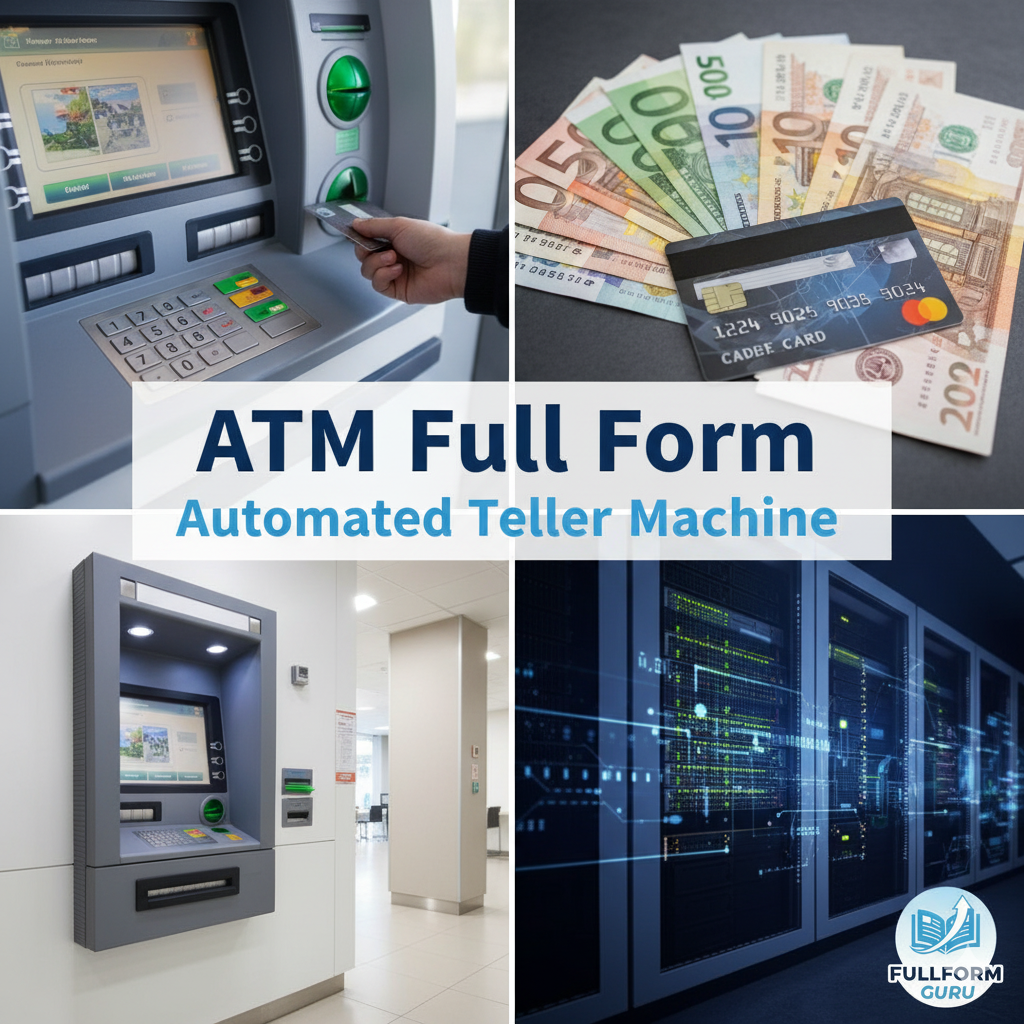
The abbreviation ATM represents Automated Teller Machine. Technology has brought major transformations to the banking industry. One of the key innovations in banking is the Automated Teller Machine (ATM). ATMs have revolutionized the way people access money and perform basic banking services. They offer convenience, speed, and accessibility, enabling users to complete financial transactions whenever and wherever needed.
In today’s digital era, understanding the ATM Full Form and how it works is essential for individuals and businesses. This article provides a complete overview of ATMs, including their purpose, types, benefits, and working process.
Full Form and Meaning
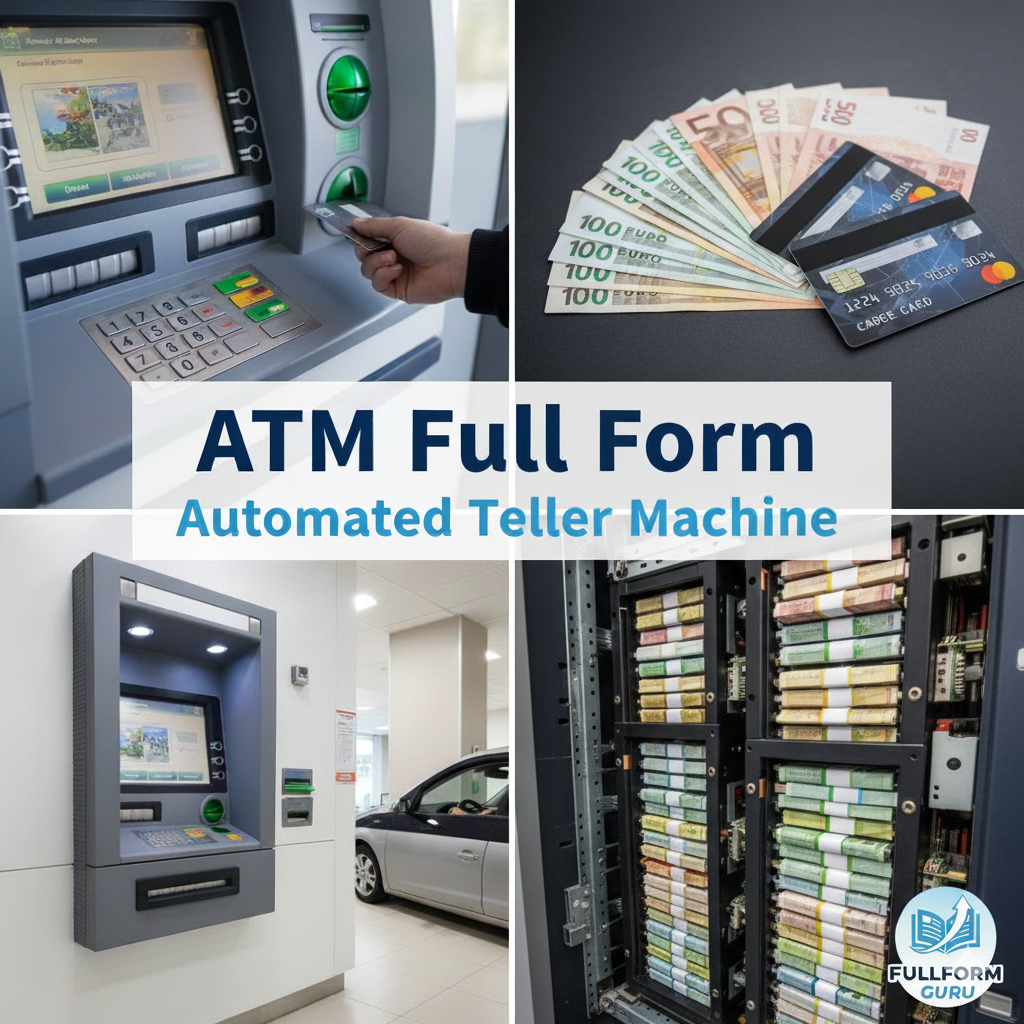
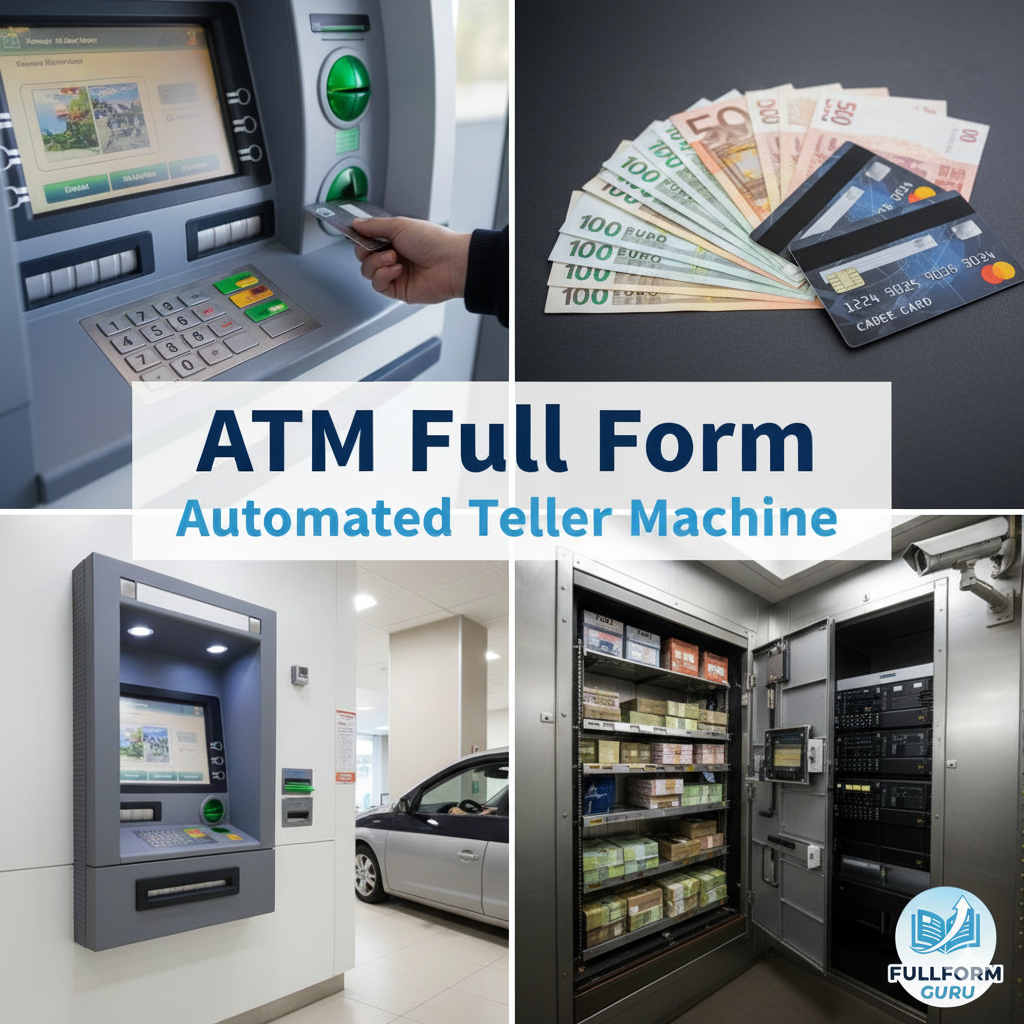
The abbreviation ATM represents Automated Teller Machine. An ATM, or Automated Teller Machine, is an electronic banking machine that allows users to perform financial transactions without relying on a human cashier or bank representative. It provides a range of services, including cash withdrawals, fund transfers, balance inquiries, and bill payments.
An ATM’s primary purpose is to provide round-the-clock banking access, removing the need to visit a branch. It functions as a self-service machine that lets customers handle basic banking tasks safely and efficiently.
Role and Importance
ATMs play a vital role in the modern banking system. They connect customers and banks by providing convenient and instant access to money.
Key Roles and Importance
- 24/7 Accessibility: The ATM provides continuous service, allowing users to withdraw or deposit money at any time.
- Time Efficiency: Users can make transactions rapidly, avoiding long waits at banking facilities.
- Financial Inclusion: ATMs make banking services available even in remote areas.
- Reduced Workload for Banks: Routine transactions are handled by machines, allowing bank staff to focus on more complex services.
- Security and Convenience: By using secure PINs and encrypted systems, banks ensure safe and reliable transactions.
Types of ATMs
ATMs come in different types, depending on their features and usage. The following are the most common types:
| Type of ATM | Description |
| On-Site ATM | Installed within the bank premises for customers visiting the branch. |
| Off-Site ATM | Located outside the bank premises, such as shopping centers, airports, or public areas. |
| White Label ATM | Owned and operated by non-banking financial companies (NBFCs). |
| Brown Label ATM | Owned by a service provider but operated by a bank. |
| Cash Dispenser Machine (CDM) | Used only for withdrawing cash and balance inquiries. |
| Smart ATM | Allows advanced features such as fund transfers, mobile recharges, and bill payments. |
These types help users understand different ATM functions, making the ATM Full Form more meaningful in practical use.
Eligibility and Basic Requirements
To use ATM services properly, users must meet specific criteria.
Basic Requirements
- A bank account (savings or current).
- A valid ATM or debit card issued by the bank.
- A Personal Identification Number (PIN) for authentication.
- Access to an ATM terminal that accepts the issued card type (VISA, MasterCard, or others).
These basic requirements allow users to access ATM services effectively once they understand the ATM Full Form.
How an ATM Works
An Automated Teller Machine operates through a combination of hardware, software, and network connectivity. The following steps explain the basic working process:
- Card Insertion: The user inserts their debit or credit card into the ATM card slot.
- Authentication: The machine requests the user to enter their PIN for verification.
- Menu Display: After successful verification, the machine displays a list of available services, including cash withdrawal, balance inquiry, and fund transfer.
- Transaction Selection: The user selects the desired service and enters relevant details such as the withdrawal amount.
- Processing: The ATM communicates with the bank server to validate the transaction.
- Completion: The machine dispenses cash, prints a receipt, or confirms the service completion on-screen.
This simple process shows why learning the ATM Full Form is helpful for new users.
Preparation or Actionable Strategy
Using ATMs safely requires awareness and proper planning. People who know the ATM Full Form often feel more confident using ATM services safely. Here are some actionable strategies for secure and efficient use:
- Protect Your PIN: Cover the keypad while typing your PIN.
- Use Secure Locations: Prefer ATMs in well-lit and supervised areas.
- Check the Machine: Avoid using ATMs that look damaged or have loose attachments.
- Collect Receipts: Take your transaction receipt and do not leave it behind.
- Regularly Monitor Bank Statements: Track your transactions to identify any unauthorized activities.
Benefits and Applications
ATMs offer numerous advantages that make banking easier and more accessible for everyone.
Major Benefits
- Instant Cash Access: Enables quick cash withdrawal anytime.
- Ease of Use: User-friendly interface suitable for all age groups.
- Reduced Bank Crowds: Reduces the need to visit banks physically.
- International Transactions: Some ATMs support global card networks for international withdrawals.
- Digital Banking Integration: Many modern ATMs support digital services, e.g, fund transfers and bill payments.
These features make ATMs valuable, and understanding the ATM Full Form helps users appreciate their convenience.
Comparison with Similar Systems
To gain a clearer understanding of ATMs, comparing them with other banking methods is useful.
| Feature | ATM | Online Banking | Bank Branch |
| Accessibility | 24/7, anywhere | Internet-based | Limited to working hours |
| Human Interaction | None | None | Direct interaction |
| Speed | Instant | Fast | Slower |
| Convenience | Very high | High | Moderate |
| Security | PIN-based | Password-based | Staff-controlled |
This table highlights how ATMs provide the perfect balance between convenience and security for everyday banking.
How to Get Started – Practical Steps
If you are new to ATM usage, follow these practical steps to get started:
- Open a bank account with a trusted financial institution.
- Request an ATM or debit card from your bank.
- Activate your card by setting a secure PIN.
- Locate a nearby ATM that supports your card type.
- Follow on-screen instructions for cash withdrawal or other services.
- Keep your card and receipt safe after completing transactions.
Common Mistakes or Myths to Avoid
Many people make simple mistakes while using ATMs. Avoiding these ensures safe and smooth transactions.
- If you enter an incorrect PIN repeatedly, your card might get locked for security reasons.
- Sharing your PIN with others can lead to unauthorized transactions.
- Assuming all ATMs charge the same fee for withdrawals.
- Ignoring transaction alerts and bank statements.
- Using ATMs with visible security issues.
Conclusion
The Full Form of ATM stands for Automated Teller Machine, which represents an advancement in financial technology. It has made banking faster, more convenient, and more accessible for millions of users worldwide.
Understanding how ATMs work and using them wisely ensures financial safety and efficiency. Whether you are withdrawing cash, checking your balance, or transferring funds, ATMs are a vital part of modern banking life.
By using ATMs responsibly and staying aware of security practices, individuals can enjoy hassle-free banking and contribute to a more connected and technologically advanced world. In short, knowing the ATM Full Form helps users make better banking decisions and use ATMs more confidently.
Author
About the Author