BAMS Full Form: Meaning, Course Details, Eligibility, and Career Scope
Introduction
BAMS stands for Bachelor of Ayurvedic Medicine and Surgery, Healthcare is one of the most respected and rapidly evolving fields globally. Along with modern medicine, traditional systems of healing have gained renewed attention for their natural and holistic approaches. Ayurveda is one such system that people have relied on for thousands of years.
The BAMS program combines traditional Ayurvedic wisdom with modern medical science, providing students with a comprehensive understanding of healthcare. This article explores the BAMS Full form, its meaning, eligibility, course structure, and career opportunities.
Full Form and Meaning
BAMS stands for Bachelor of Ayurvedic Medicine and Surgery, a degree focused on the traditional system of healthcare known as Ayurveda.
It is an undergraduate degree program designed to educate students in Ayurvedic and modern medical sciences, which is why understanding the BAMS Full Form becomes essential for new aspirants. BAMS aims to train professionals who can diagnose, treat, and prevent illnesses using Ayurvedic principles while understanding the role of modern diagnostics and therapies.
The word “Ayurveda” means “Science of Life”, emphasizing harmony between body, mind, and spirit. This deeper meaning also reflects why many students search for the BAMS Full Form before choosing this medical path. BAMS graduates work to promote well-being through Ayurvedic medicines, healthy habits, and preventive healthcare.
Role and Importance
BAMS plays a vital role in today’s healthcare system, and understanding what BAMS stands for helps clarify why this course is becoming increasingly valuable. The course not only focuses on curing diseases but also on maintaining long-term health and balance in the human body.
Key importance of BAMS includes:
- Promoting the use of natural and herbal treatments with minimal side effects.
- Encouraging preventive healthcare through lifestyle and diet management.
- Bridging the gap between traditional and modern medical practices.
- Providing affordable healthcare solutions in rural and urban areas.
- Contributing to global recognition of Ayurvedic medicine.
In modern times, BAMS professionals are increasingly involved in wellness programs, research, and integrative medicine worldwide.
Types or Components of the BAMS Course
The BAMS course combines both theoretical knowledge and practical training. It includes learning about human anatomy, physiology, pharmacology, surgery, and traditional Ayurvedic disciplines.
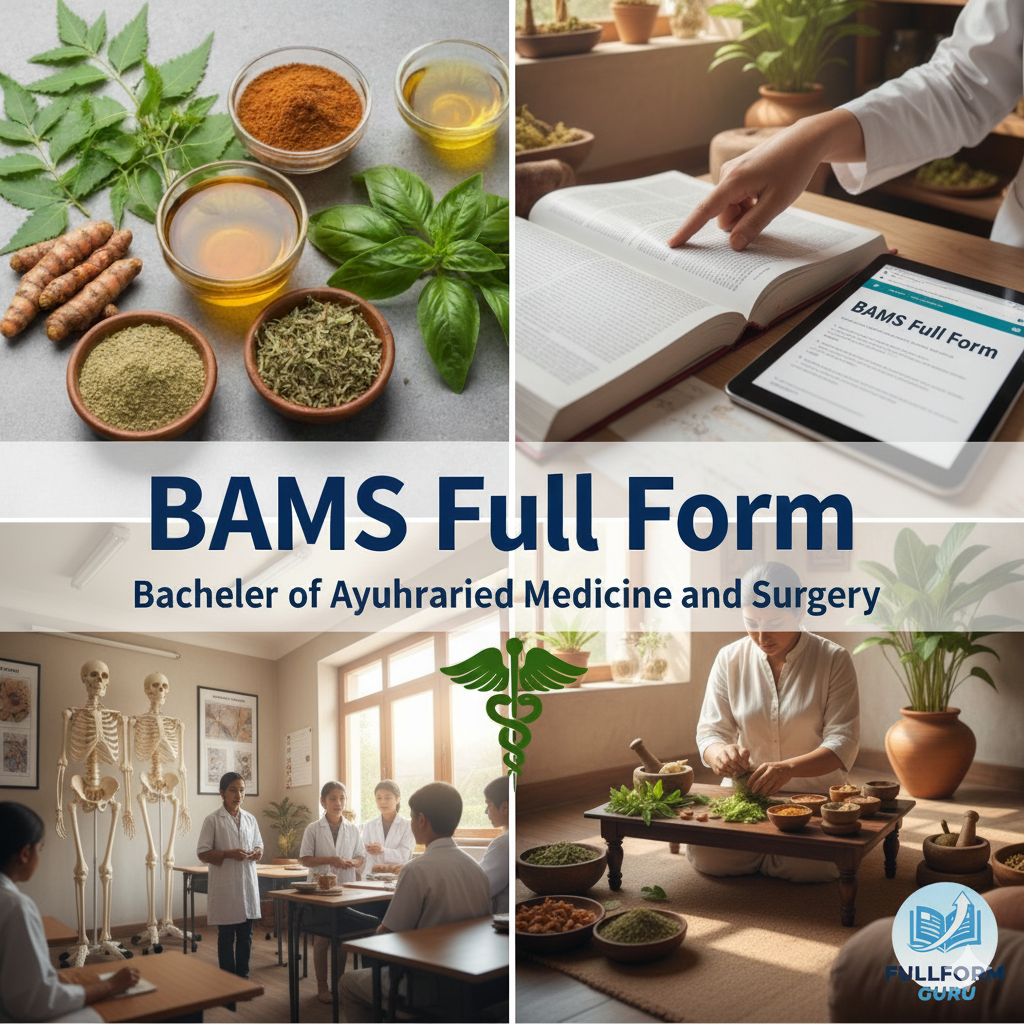
Main Components of the BAMS Curriculum:
| Component | Description |
| Ayurvedic Subjects | Charaka Samhita, Sushruta Samhita, Dravyaguna (Pharmacology), and Rasashastra (Herbal Chemistry) |
| Modern Science Subjects | Anatomy, Physiology, Pathology, and Microbiology |
| Practical Training | Clinical practice in Ayurvedic hospitals and health centers |
| Internship | One-year mandatory training in various medical departments |
| Research Work | Introduction to Ayurvedic research and modern analytical methods |
The well-organized curriculum enables students to develop diagnostic and treatment abilities supported by a solid scientific foundation.
Eligibility and Basic Requirements
To pursue a BAMS degree, students must meet specific eligibility criteria, and those exploring the BAMS Full Form usually check these requirements first.
Basic Requirements for Admission:
- Completion of 12 years of schooling (high school) with Physics, Chemistry, and Biology as main subjects.
- A minimum required percentage as set by the institution.
- Qualifying in a recognized medical entrance examination (based on the country or university).
- Basic understanding and interest in biology, herbal sciences, and healthcare.
In addition to academic requirements, strong observation skills, empathy, and patience are essential traits for success in the BAMS field.
Step-by-Step Process: How to Pursue BAMS
The process of pursuing a BAMS degree typically involves several stages, especially for students who start by learning the BAMS Full Form and its scope.
Step-by-Step Path:
- Complete High School Education with science subjects.
- Apply for medical entrance exams that include BAMS courses.
- Select a recognized Ayurvedic college after qualifying for admission.
- Enroll in the BAMS program and complete theoretical and practical coursework.
- Participate in clinical training and internships under qualified professionals.
- Complete final examinations and obtain your BAMS degree.
- Register as a licensed Ayurvedic practitioner with the relevant medical authorities.
This process ensures that graduates are well-prepared for real-world healthcare environments.
Preparation or Actionable Strategy
Students planning to pursue BAMS should adopt effective strategies for both academic and personal preparation.
Practical Tips for BAMS Aspirants:
- Develop a strong foundation in Biology and Chemistry.
- Study the basic principles of Ayurveda to understand its core philosophy.
- Enhance communication and analytical skills for effective patient care.
- Gain exposure to Ayurvedic herbs and natural medicines through short courses or workshops.
- Maintain a balanced lifestyle that aligns with Ayurvedic values, including proper diet and mindfulness.
These steps guide future practitioners toward academic excellence and professional growth.
Career Opportunities and Applications
BAMS graduates have multiple career opportunities, and many job seekers often search the BAMS Full Form to understand the professional value of this degree. The demand for Ayurvedic experts is growing globally as awareness of holistic medicine continues to rise.
Top Career Options after BAMS:
- Ayurvedic Practitioner: Diagnose and treat patients using Ayurvedic methods.
- Medical Officer: Work in government or private healthcare institutions.
- Researcher: Conduct studies on herbal medicines and natural healing methods.
- Lecturer or Professor: Teach Ayurvedic science in universities and colleges.
- Wellness Consultant: Advise clients on diet, lifestyle, and natural therapies.
- Pharmaceutical Executive: Work in the production of herbal and Ayurvedic products.
- Hospital Administrator: Manage Ayurvedic hospitals and wellness centers.
Growing Global Applications:
- Integration with modern healthcare systems for combined treatments.
- Development of Ayurvedic cosmetic and nutritional products.
- Expansion of Ayurvedic tourism and wellness resorts.
This variety of career paths makes BAMS among the most valued and adaptable medical courses.
Comparison with Similar Medical Courses
Students often compare BAMS to MBBS and BHMS, and knowing the BAMS Full Form helps them evaluate these courses more accurately.
| Feature | BAMS | MBBS | BHMS |
| Full Form | Bachelor of Ayurvedic Medicine and Surgery | Bachelor of Medicine and Bachelor of Surgery | Bachelor of Homeopathic Medicine and Surgery |
| Focus Area | Ayurveda and Herbal Medicine | Modern Allopathic Medicine | Homeopathy and Alternative Healing |
| Treatment Method | Natural and Herbal Remedies | Modern Surgical and Drug-based | Diluted Remedies and Natural Methods |
| Course Duration | 5.5 Years (including internship) | 5.5 Years (including internship) | 5.5 Years (including internship) |
| Career Scope | Ayurveda Clinics, Wellness Centers, Research | Hospitals, Clinics, Surgery | Homeopathic Clinics, Research Centers |
This comparison shows that while MBBS focuses on modern medicine, BAMS emphasizes natural healing and preventive care, making it a valuable complement to conventional healthcare systems.
How to Get Started – Practical Steps
If you are inspired to build a career in Ayurvedic medicine, start by understanding the BAMS Full Form and researching accredited institutions:
- Research accredited institutions that offer BAMS programs.
- Prepare for entrance exams with a strong focus on science subjects.
- Understand the course structure and internship requirements.
- Explore scholarships or financial aid for medical education.
- Engage in self-study of Ayurvedic texts to build early knowledge.
- Network with professionals in the Ayurvedic and medical community.
Following these steps will help you start your BAMS journey with confidence.
Common Mistakes or Myths to Avoid
- Assuming BAMS is less valuable than MBBS, it has global recognition in integrative healthcare.
- While some consider Ayurveda unscientific, centuries of evidence and research validate its effectiveness.
- Ignoring modern subjects—BAMS includes both traditional and modern science.
- Neglecting internship experience—practical training is essential for real-world success.
Avoiding these misconceptions helps students fully appreciate the depth and value of the BAMS degree.
Conclusion
The BAMS Full Form, Bachelor of Ayurvedic Medicine and Surgery, represents a unique combination of ancient wisdom and modern science. It empowers students to become holistic healthcare professionals who focus on natural healing, balance, and preventive care.
As the world shifts toward wellness and sustainability, BAMS graduates have a significant role in society. They help improve global health through the timeless principles of Ayurveda.
Pursuing BAMS is not only a career choice but also a commitment to promoting wellness, compassion, and harmony in human life.
Author
About the Author