IPS Full Form: Meaning, Roles, and How to Build a Career in the Indian Police Service
Introduction
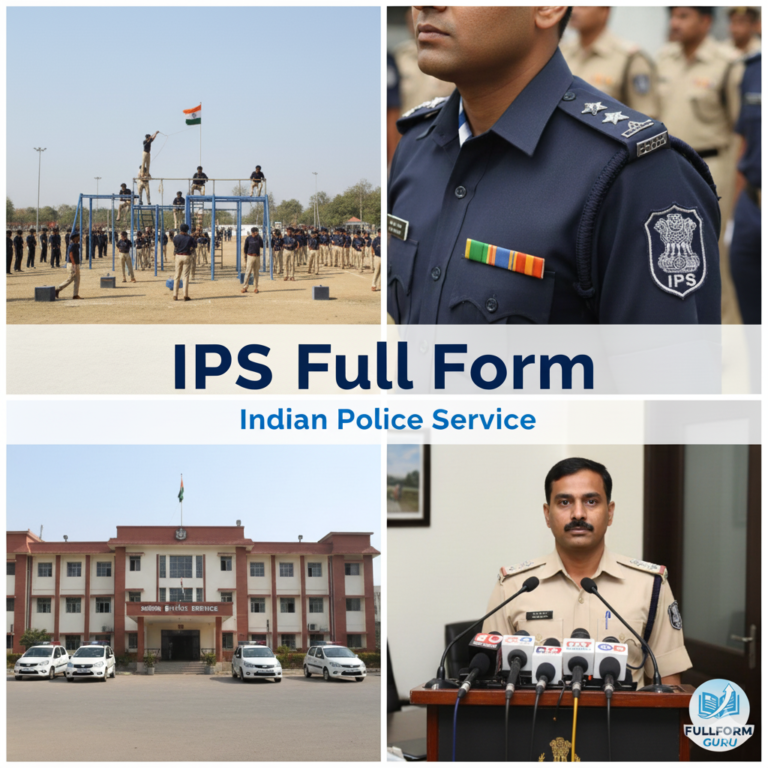
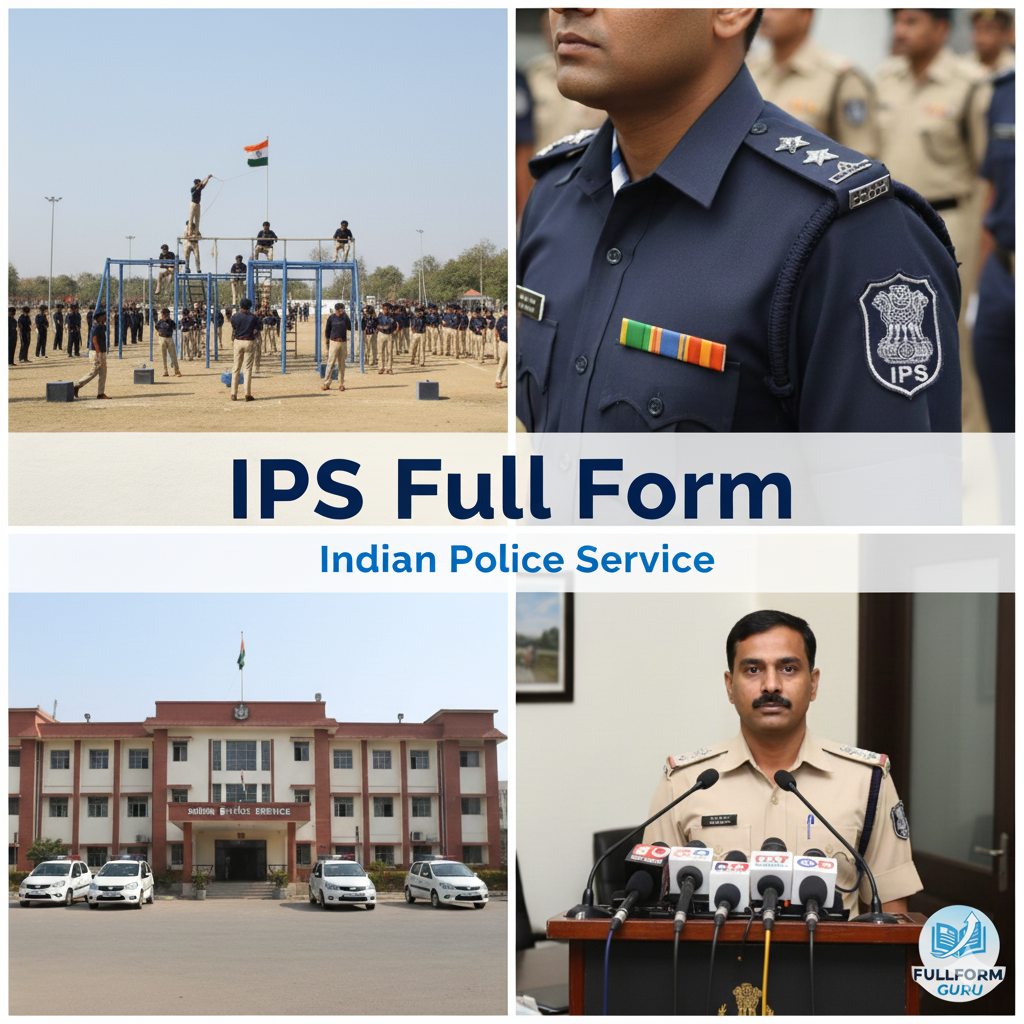
The Indian Police Service (IPS) is one of the most prestigious branches of public service. It holds great importance in upholding the law and ensuring peace within the country. IPS officers are known for their discipline, leadership, and commitment to upholding justice and protecting citizens’ rights. Many students search for the IPS Full Form when they first hear about this prestigious service.
The IPS is not just a job; it is a responsibility that requires courage, intelligence, and integrity. Every year, countless aspirants dream of joining the service to contribute to national security and play a crucial role in strengthening the country’s law enforcement system.
This article explains the Full form of IPS, its meaning, roles, eligibility criteria, structure, and how aspiring candidates can build a successful career in this esteemed service.
Full Form and Meaning
IPS stands for Indian Police Service, a prestigious branch of India’s civil services responsible for maintaining law and order. It is one of the three nationwide civil services, along with the Indian Administrative Service (IAS) and the Indian Forest Service (IFS).
The IPS was established in 1948, replacing the former Indian Imperial Police of the British era. Since then, it has become a symbol of authority and public trust. IPS officers are responsible for managing police forces at both the central and state levels, ensuring that law and order are maintained effectively.
In simple terms, the IPS is a nationwide service that trains individuals to lead police organizations and maintain peace, safety, and justice throughout the country. Understanding the Full form of IPS helps aspirants recognize the value and responsibility attached to the service.
Role and Importance of IPS
The IPS plays a vital role in the country’s law enforcement and security framework. Recognizing IPS also underscores the service’s crucial role in ensuring national security and upholding lawful governance.
Key Responsibilities of IPS Officers:
- Maintaining public order and preventing crimes.
- Leading and managing police departments and security agencies.
- Investigating and solving criminal cases efficiently.
- Protecting VIPs and ensuring the security of major public events.
- Coordinating with other departments during natural disasters, emergencies, or riots.
- Implementing government policies related to law enforcement and public safety.
IPS officers also serve in central organizations such as:
- Central Bureau of Investigation (CBI)
- Border Security Force (BSF)
- Central Reserve Police Force (CRPF)
- Intelligence Bureau (IB)
- National Investigation Agency (NIA)
These deployments highlight the broad scope of responsibility linked with the Indian Police Service (IPS).
Components of IPS Structure
The IPS structure is well-defined and organized to ensure efficient administration.
Main Components Include:
- Ranks: The hierarchy begins with the Assistant Superintendent of Police (ASP) and moves upward to higher ranks, including Superintendent of Police (SP), Deputy Inspector General (DIG), Inspector General (IG), and Director General of Police (DGP).
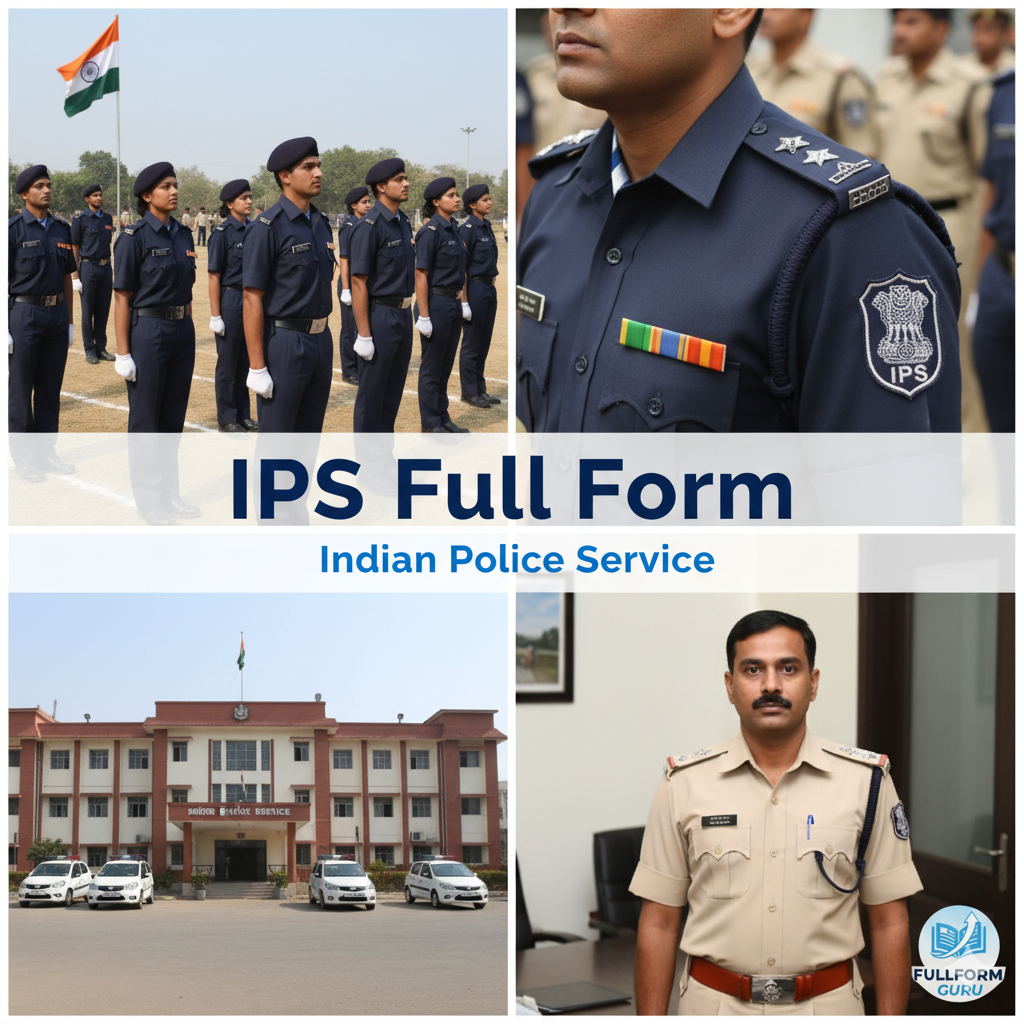
- Training: During training, officers also learn leadership, investigation methods, and public interaction skills, which reflect the values behind the IPS Full Form.
- Cadre System: Officers receive postings across various state or joint cadres based on vacancies and merit.
- Central Deputation: IPS officers may also serve on deputation to central agencies for specific roles.
Eligibility and Basic Requirements
To become an IPS officer, candidates must meet the following educational, physical, and nationality criteria.
Basic Eligibility:
- Education: Candidates must have completed a bachelor’s degree in any field from a recognized university.
- Age Limit: Typically between 21 and 32 years, with relaxation for reserved categories.
- Nationality: Must be a citizen of India.
- Physical Fitness: Candidates are required to meet specific physical and medical standards of height, vision, and overall health.
Skills Required:
- Strong communication and decision-making ability.
- Leadership and analytical thinking.
- Integrity, courage, and emotional stability.
- Ability to work under pressure.
Understanding the Full form of IPS inspires many candidates to start preparation early.
Step-by-Step Process to Become an IPS Officer
The process of becoming an IPS officer is highly competitive and managed by the Union Public Service Commission (UPSC).
Steps to Join IPS:
- Check Eligibility: Ensure you meet the education, age, and nationality criteria.
- Apply for UPSC Civil Services Examination (CSE): Submit the online application through the UPSC portal.
- Preliminary Examination: A first-level test that includes two multiple-choice papers to screen candidates.
- Main Examination: A detailed written exam with nine papers covering various subjects.
- Interview/Personality Test: Evaluates the candidate’s personality, leadership, and communication skills.
- Medical and Physical Tests: Ensures fitness for police service.
- Training: Selected candidates undergo professional training before joining duty.
This structured process ensures that only the most capable and committed candidates are selected to join the Indian Police Service. Candidates who study with a clear understanding of the IPS Full Form remain more focused and motivated during the UPSC journey.
Preparation and Strategy
Becoming an IPS officer requires consistent effort, discipline, and a well-planned study strategy.
Preparation Tips:
- Create a study schedule that includes the entire UPSC syllabus.
- Read newspapers and current affairs daily.
- Study standard reference books for history, polity, economics, and general studies.
- Practice mock tests and previous year question papers.
- Maintain physical fitness through regular exercise and a healthy lifestyle.
Staying consistent and self-motivated throughout the preparation process is key to success.
Career Opportunities and Benefits
IPS officers enjoy a wide range of career opportunities and benefits, both professionally and personally.
Career Opportunities:
- Leadership roles in law enforcement and public administration.
- Deputation to international organizations such as the United Nations.
- Opportunities to work in intelligence and security agencies.
- Strategic roles in counterterrorism and disaster management.
Benefits:
- High respect and authority in society.
- Job stability and attractive perks.
- Opportunities to make a direct impact on public welfare.
- Lifetime pension and other retirement benefits.
Comparison with Similar Services
| Service | Primary Focus | Training Academy | Nature of Work |
| IAS | Administration and policy-making | Lal Bahadur Shastri National Academy of Administration | Developmental and governance roles |
| IPS | Law enforcement and security | Sardar Vallabhbhai Patel National Police Academy | Maintaining law and order and conducting crime investigations |
| IFS | Diplomacy and foreign affairs | Foreign Service Institute | Representing the country internationally |
This table highlights that while each service is prestigious, the IPS focuses mainly on law enforcement and internal security.
How to Get Started – Practical Steps
If you aspire to become an IPS officer, follow these practical steps to begin your journey:
- Familiarize yourself with the UPSC syllabus and exam pattern in full.
- Build a strong foundation in current affairs and general knowledge.
- Develop leadership, decision-making, and communication skills.
- Stay consistent in your study routine and maintain overall fitness.
- If necessary, get advice and support from experienced mentors or training centers.
Early preparation and a focused approach can significantly improve your chances of success.
Common Mistakes or Myths to Avoid
- Myth: Only candidates from top universities can clear the UPSC exam.
- Reality: Any dedicated and hardworking student can achieve success through proper preparation.
- Mistake: Ignoring physical fitness requirements.
- Tip: Start maintaining health and stamina early.
- Myth: The IPS is only about power.
- Reality: It is more about responsibility, service, and discipline.
Conclusion
The Indian Police Service (IPS) is a symbol of strength, discipline, and dedication to public service. It offers individuals the chance to serve their country, maintain peace, and uphold justice.
Becoming an IPS officer requires patience, persistence, and hard work, but the rewards are immense. It is a journey of self-growth, leadership, and national contribution.
If you aspire to join the IPS, begin your preparation today with determination and confidence. Keep in mind that effective leadership starts with the willingness to serve and protect. Remember, the IPS’s Full form is not just a name but a commitment to serve and protect.
Author
About the Author