OTT Full Form: Meaning, Types, How OTT Works, and Why It Matters
Introduction
The OTT Full Form is Over-The-Top, In recent years, entertainment has shifted from traditional television and theaters to online platforms that allow viewers to watch content anytime and anywhere. Understanding the OTT Full Form helps readers know why online platforms now offer TV, films, and live events without traditional broadcast channels. OTT services drive this shift, transforming the way people access movies, shows, sports, and even live events. With flexible plans, a global reach, and a wide variety of content, OTT platforms have become one of the most popular ways to consume media. This article explains the meaning of OTT, its key types, how it functions, and its importance in the digital age.
OTT Full Form and Meaning
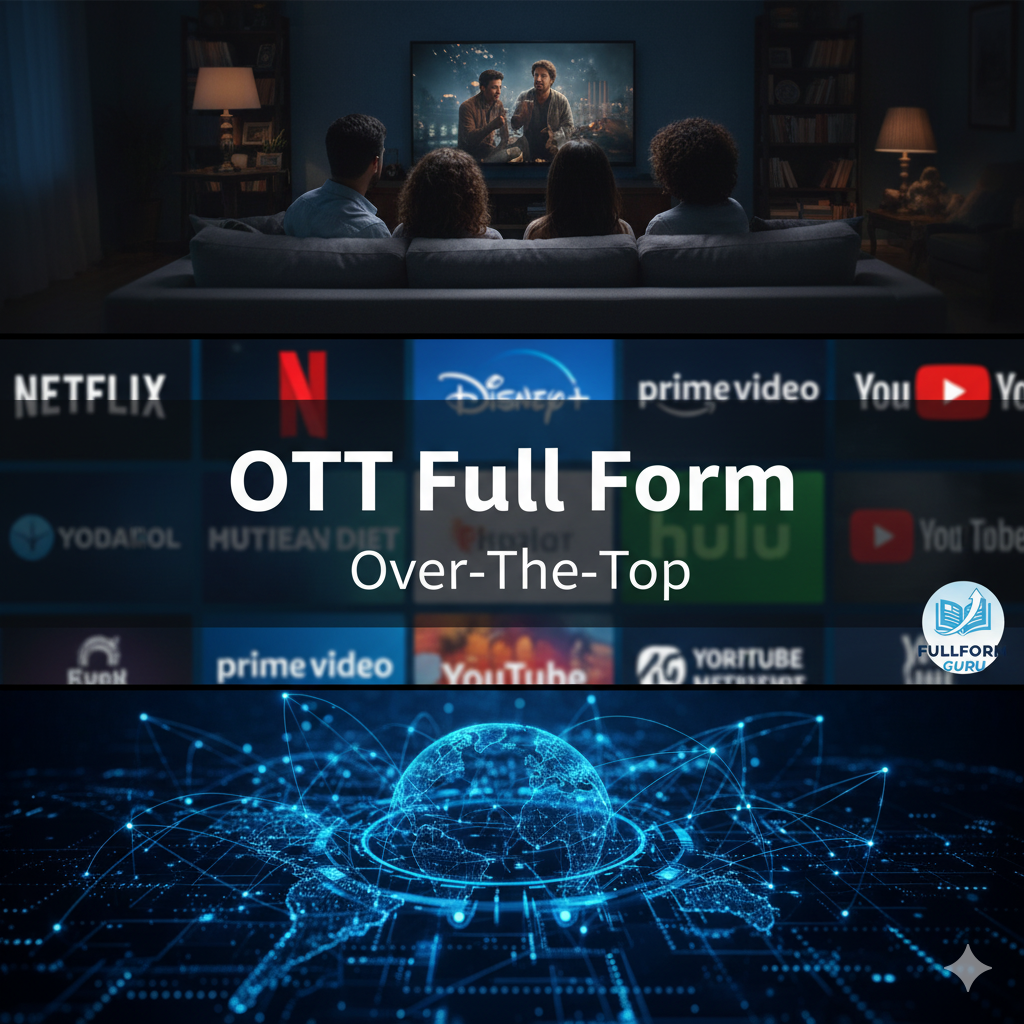
The OTT Full Form is Over-The-Top, which means content is delivered directly to users online, avoiding traditional cable TV, satellite services, or physical media. OTT platforms allow users to watch movies, TV shows, documentaries, and live events using smartphones, smart TVs, tablets, and laptops. Simply put, OTT delivers entertainment directly over the web.
Role and Importance of OTT (Why It Matters)
OTT has transformed how people around the world access and enjoy entertainment. Instead of being limited by fixed schedules, users can watch what they want, when they want, and on the device of their choice. This flexibility makes OTT especially important in today’s fast-moving digital lifestyle.
For businesses and creators, OTT provides new opportunities to reach global audiences without depending on traditional broadcasters. It also enables personalized recommendations, stronger audience engagement, and modern revenue models such as subscriptions or advertisements. In short, OTT matters because it gives viewers control and offers creators a wider platform.
Types of OTT Platforms
OTT platforms come in different types, based on how they provide content and how users access it. Each type serves a unique audience requirement along with business goals.
Here’s a simplified mini-table to understand the major types of OTT platforms:
| Type of OTT Platform | Description | Example Use Case |
| SVOD (Subscription Video on Demand) | Users pay a regular subscription charge to view content without limits. | Monthly subscription to movie/series library. |
| AVOD (Advertising Video on Demand) | Content is free and supported by advertising. | Watching shows with ad breaks. |
| TVOD (Transactional Video on Demand) | Users pay per movie or episode. | Renting a new film for 48 hours. |
| Hybrid Models | Combines subscription and ads or pay-per-view. | Lower-cost plan with ads + premium upgrade. |
These categories explain how the OTT Full Form supports diverse business models — from subscription libraries to ad-supported streaming.
Eligibility & Basic Requirements
Accessing OTT platforms is simple and does not require any special eligibility, like exams or documents. However, there are some basic requirements to get started:
- Device: A smartphone, smart TV, tablet, or computer with internet access.
- Internet Connection: A stable internet connection with sufficient speed for smooth streaming.
- Account Setup: Most platforms require you to create an account using an email or phone number.
- Payment Method (if needed): Subscription-based services may require payment through debit/credit cards, digital wallets, or online banking.
These requirements make OTT platforms accessible to almost everyone, ensuring global reach and convenience.
Syllabus Overview & How OTT Works (Step-by-Step)
OTT platforms operate through a simple and efficient process that lets viewers watch content anytime, anywhere. Understanding the OTT Full Form makes it easier to follow the technical steps that deliver a video from a server to your screen. Here’s how it works step by step:
- Content Creation – Movies, series, and shows are either created by producers or licensed by platforms.
- Encoding & Storage – Content is converted into digital formats and stored on secure servers.
- Distribution via Internet – When a user clicks on a video, the platform streams it online using data packets.
- User Access – Viewers log in through apps or websites on their devices to watch content.
- Monetization – Platforms earn revenue through subscriptions, ads, or pay-per-view models.
This process ensures that OTT content reaches viewers directly, bypassing traditional broadcasting methods.
Preparation Strategy (Practical Steps to Use OTT Effectively)
To make the best use of OTT platforms, follow these simple strategies:
- Choose Wisely – Select platforms that match your interests (movies, sports, documentaries, learning).
- Set a Budget – Choose subscription plans that suit your financial comfort.
- Limit Screen Time – Schedule viewing hours to avoid overuse.
- Use Multiple Devices – Take advantage of cross-device access for flexibility.
- Explore Learning Content – Beyond entertainment, explore educational or skill-based programs.
These steps help viewers make the most of OTT platforms in a balanced way.
Career Opportunities After OTT
The rise of OTT platforms has opened doors to many career options, such as:
- Content Creator – Producing original shows, short films, or documentaries.
- Digital Marketer – Promoting OTT content through online campaigns.
- Actor/Performer – Expanding opportunities in web series and film.
- Scriptwriter – Writing engaging stories tailored for streaming audiences.
- Technical Expert – Managing video streaming, app development, and user experience.
OTT is not just for entertainment but also a growing field for professional careers.
Comparison with Other Media Platforms
When assessing delivery methods, note that OTT — Over-The-Top — denotes internet-based streaming that’s accessible globally at any time.
| Platform | Content Delivery Method | Accessibility | Key Difference from OTT |
| OTT | Internet streaming apps | Global, anytime | User chooses what and when to watch |
| Television | Cable or satellite | Limited to the schedule | Fixed timing, less flexibility |
| Cinema | Theaters | Location-based | Big-screen experience, but not on demand |
| Radio | FM/AM frequencies | Regional | Audio-only, not visual like OTT |
This table highlights how OTT differs from traditional media by offering flexibility, convenience, and personalized viewing.
How to Get Started — Practical Steps
If you are new to OTT platforms and want to make the most of them, here are some practical steps to follow:
- Choose a Reliable Internet Connection – Ensure you have a stable and reasonably fast connection for smooth streaming.
- Select a Trusted OTT Platform – Pick platforms that match your interests (movies, sports, documentaries, or mixed content).
- Create an Account – Sign up using your email or mobile number to start accessing content.
- Explore Free Trials – Many services offer trial periods to help you decide before making a payment.
- Set a Budget – If you subscribe, choose a plan that suits your budget and content preferences.
- Download Apps Across Devices – Use OTT platforms on smartphones, smart TVs, or laptops for flexible viewing.
- Stay Updated – Regularly check for new releases and recommended shows to enjoy fresh content.
These steps will help you start your OTT journey smoothly while making better choices.
Common Mistakes / Myths to Avoid
When using OTT platforms, many viewers fall into common mistakes or believe myths that can reduce their experience. Some of the most frequent ones include:
- Myth: OTT is always free – While some platforms offer free content, most require a subscription for full access.
- Mistake: Ignoring internet speed – A weak connection can cause buffering and poor video quality.
- Myth: All platforms have related content – Each OTT service has unique shows and movies, so choose wisely.
- Mistake: Overspending on multiple subscriptions – Many users sign up for too many services at once, which can strain their budget.
- Myth: OTT replaces cinemas completely – While OTT is convenient, cinemas still provide a different experience.
Being aware of these points helps viewers enjoy OTT without unnecessary confusion or disappointment.
Conclusion
The OTT Full Form (Over-The-Top) describes a new era of internet streaming that puts viewers in control of entertainment. From movies and TV shows to live events and original web series, OTT platforms provide flexibility, variety, and global reach. They break traditional boundaries, allowing audiences to watch their favourite content anytime and anywhere.
For creators, OTT has opened new doors to showcase talent directly to viewers.
For audiences, it has made quality content more affordable and accessible than ever before. However, making the most of OTT requires better choices—selecting the right platform, balancing subscriptions, and maintaining a stable internet connection.
As technology continues to advance, the influence of OTT will only grow stronger. Whether you are a student, professional, or simply someone who enjoys entertainment, using OTT wisely can enrich your life with stories, knowledge, and inspiration.
Stay informed, choose smartly, and let OTT bring the world of entertainment to your fingertips.
Author
About the Author